Andrew
 Should I Worry When My Dog Has Diarrhea?
Diarrhea is a very common issue for dogs and can sometimes go away on its own in a day or two. That being said; it is important to remember that diarrhea itself isn’t a disease, but a symptom of other underlying issues. What you need to do is keep a close eye on a few things during the first 24 hours after the first sight of your dog’s diarrhea. This way you’ll have a solid idea of what caused it and how to prevent it. In this guide, we’ll explore some of the common causes, possible underlying issues, what you should do, and some tips for mild dog diarrhea treatment at home.
Possible Causes When Your Dog Has Diarrhea
Dog diarrhea can be broken down into two main categories; non-threatening and serious issues:
Non-Threatening Issues
Eating inappropriate foods – This can be as simple as eating table scraps during human mealtime.
Sudden changes in dog food or treats – A prime example is changing the brand and/or manufacturer.
General changes in your dog’s diet – This can include introducing small amounts of new treats or foods that your dog have never eaten before while maintaining his normal food and treat regimen.
Serious Issues
Ingesting garbage or spoiled food – This is serious because there can be poisonous detergents and other chemical agents in garbage bags. Not to mention broken down pieces of items that can be choking hazards or risks of internal damage.
Anxiety and/or stress – The “fight or flight” response from excess stress/anxiety can trigger a sudden surge of adrenaline and other stress hormones that rapidly shifts the dog’s bodily priorities. This priority shift can affect blood flow by diverting it away from “non-essential” organs like intestines towards “essential” organs like muscles, heart and lungs. That sudden decrease in blood flow disrupts normal functions of the gut and can lead to rapid, uncoordinated muscle contractions in the area. Which means food moves through the system too quickly than it can be absorbed and results in diarrhea.
Ingestion of toxins and poisons – The lining of the dog’s stomach and intestines can get irritated by toxins and poisons which cause them to become inflamed. The inflamed damaged tissues react by weeping fluid, blood and excess mucus directly into the guts which then liquify the stool, resulting in diarrhea.
Parasites like roundworms and whipworms – Whipworms have thin, whip-like head that they use to burrow deep into the dog’s mucosal lining inside its gut. This can cause severe, localized inflammation (colitis) that results in the tissue’s inability to absorb water as well as similar gut weeping response described in the toxins section above. Both combine to cause dog diarrhea. Roundworms move around constantly and steal nutrients from foods that your dog ate. Their physical movements irritate your dog’s delicate intestinal lining, which has the same result as we mentioned earlier for toxins and whipworms. Foods that have nutrients stolen become unabsorbed matter in the gut and draws excess water into the intestines which triggers the dog’s gut to speed up contractions to flush the irritating load out of it’s system. That can cause the dog’s diarrhea to worsen.
These are just some examples, there are more serious issues that has diarrhea as a symptom. Consulting your vet is the best course of action when you detect dog diarrhea.
What to Do When Your Dog Has Diarrhea
Now that you are aware of the various causes of dog diarrhea as well as how serious the underlying condition could be, here’s a 3-step guide on what to do when your dog has the runs.
- Monitor stool frequency – As soon as you notice your dog has diarrhea, pay attention to how often your dog passes its stool. If your dog only experiences a watery stool once and behaves normally within 24 hours then you shouldn’t have anything to worry about. However, when your dog passes soft or runny stool multiple times within 24 – 48 hours, then it’s time to consult your vet.
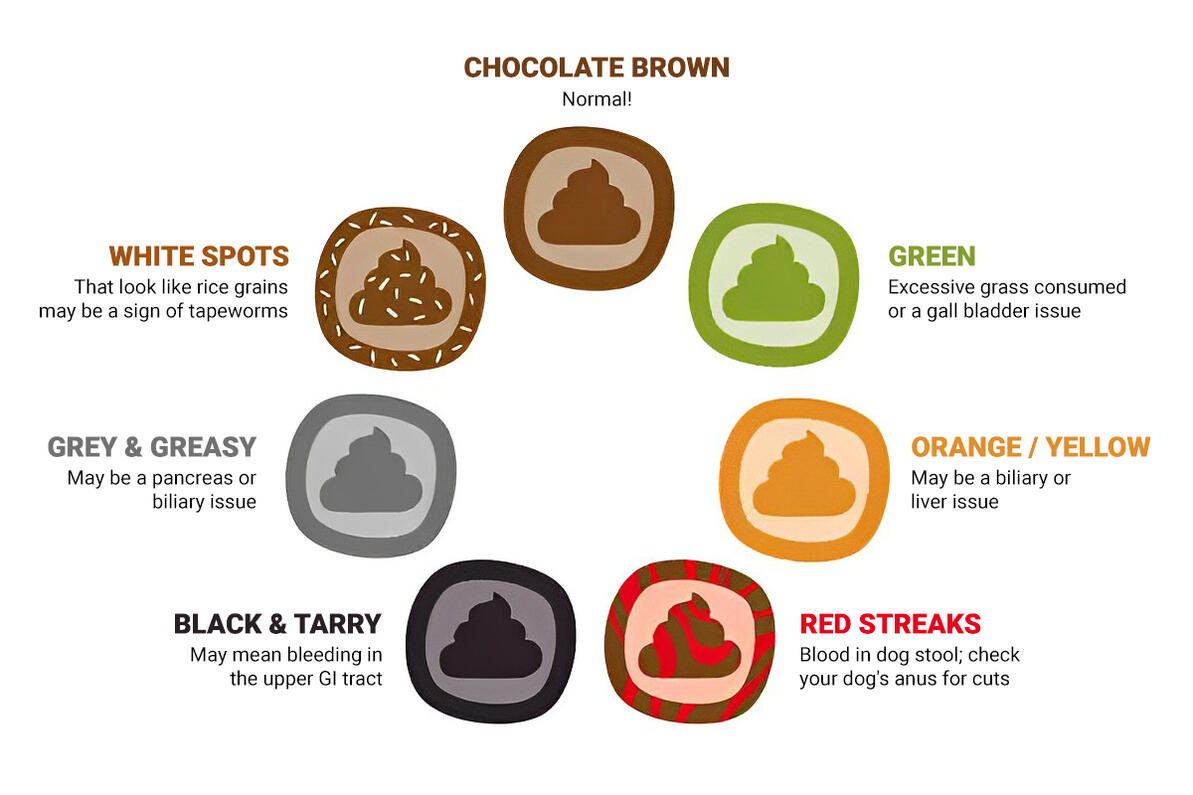
- Inspect the stool – Examining your dog’s stool can provide insight into possible causes or underlying conditions. Use resources like this Dog Poop Color Wheel by Purina Singapore as a general guide. Normal, Green and Orange/Yellow colors are less of a concern. While the other colors may indicate a need for urgent veterinary attention. You should also be able to spot traces of things your dog shouldn’t be eating like string, candy wrapper, dog toy stuffing or shrimp tails (That last one was from personal experience!) in your dog’s stool.
- Observe your dog for additional symptoms – If your dog shows any of the following symptoms along with diarrhea, arrange an appointment with your vet immediately:
- Lethargy
- Decreased appetite
- Fever
- Belly pain
- Vomiting
- Abdominal distention (swelling)
Consider filling out this questionnaire by the Veterinary Centers of America in Canada to help your vet assess the seriousness of the situation. It is very important to keep track of your dog’s behavior during the first 24 – 48 hours after you notice your dog having diarrhea, so try to fill out the questionnaire as soon as you can. Save the link so that you’ll be ready to take notes the next time your dog has the runs.
Dog Diarrhea Treatments You Can Do at Home
First off, never give your dog human medications under any situation. Most human medications are toxic to dogs and your vet should be the only one to prescribe medications for your dog. Here are a few things you can do at home as dog diarrhea treatments:
- Fasting – Stopping your dog from eating more food can allow it to recover as there won’t be anything inside your pooch to pass out as stool. Avoid fasting puppies, old dogs and small dogs as their ability to recover isn’t as strong as healthy medium to large size dogs. Always consult your vet before fasting your dog.
- Pumpkin – Cooked or plain canned pumpkins can help with your dog’s GI (gastrointestinal) problems. Never feed your dog flavored, sweetened or pumpkin filling that is meant for baking. Talk to your vet to see if this treatment is right for your dog. Cooked pumpkin can become a healthy part of your dog’s diet in the long run to keep them healthy and strong! Consult your vet on how you can safely incorporate it into your dog’s diet.
- Electrolyte – Just like people, it is a good idea to have soluble electrolyte mix in the house for when your dog has the runs. Consult your vet on where to buy and how to use dog-grade electrolyte mixtures. You can also ask your vet about how to make your own dog-safe electrolyte mix for their water bowl as well.
Conclusion
When your dog has the runs, you’ll need to observe it’s behavior and stool during the first 24 hours. There won’t be much to worry about if your dog recovers quickly without recurring diarrhea. If your pooch has to pass stool multiple times or if the diarrhea comes back on the second day, then you should contact your vet right away. Also remember to keep an eye out for additional symptoms like lethargy, decreased appetite and fever which could signal a more serious underlying issue. Arrange a vet visit right away if this is the case.
Don’t change your dog’s diet on a whim and make sure you have at least a week or two worth of the old food to slowly mix with the new food. Slowly transition your dog to the new food over multiple weeks, mixing less old food and more new food as you go. You can keep your dog’s stomach healthy by including pumpkin in its regular diet. Always consult your vet when changing dog food, making new changes to your dog’s diet, feeding supplements to your dog and before trying out any dog diarrhea treatments at home.
References
https://www.nurvc.com/site/blog/2021/08/15/diarrhea-in-dogs
https://vcacanada.com/know-your-pet/diarrhea-in-dogs
https://www.akc.org/expert-advice/health/dog-diarrhea/
https://vcacanada.com/know-your-pet/diarrhea-questionnaire-and-checklist-for-dogs